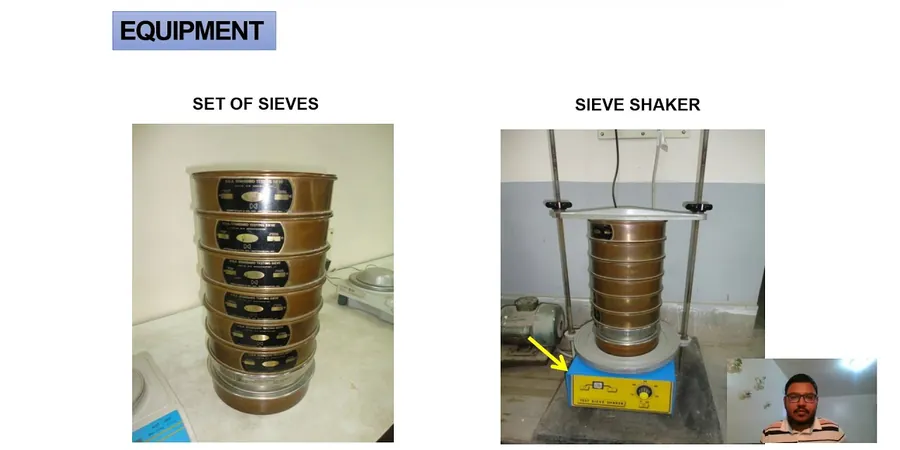
Pukekohe’s development accelerated through the 1960s as market gardens gave way to residential subdivisions, and with that shift came a quiet geological challenge that still defines local earthworks today. The volcanic loams overlying weathered Waitemata Group siltstone create a layered profile where coarse pumiceous topsoil masks fine-grained subsoil, and assuming uniformity across a building platform has led to more than one costly drainage failure south of the town centre. Our laboratory team runs the combined sieve-and-hydrometer analysis precisely because that transition zone—where the sand fraction drops and the silt/clay fraction climbs—controls both permeability and stiffness in ways that standard visual logging misses. For deeper investigation we often pair the particle distribution curve with CPT testing to correlate fines content with cone resistance across the full soil column.
A particle distribution curve is not just a classification exercise—it is the first reliable predictor of drainage behaviour, frost susceptibility, and compaction response in Pukekohe’s volcanic-derived soils.