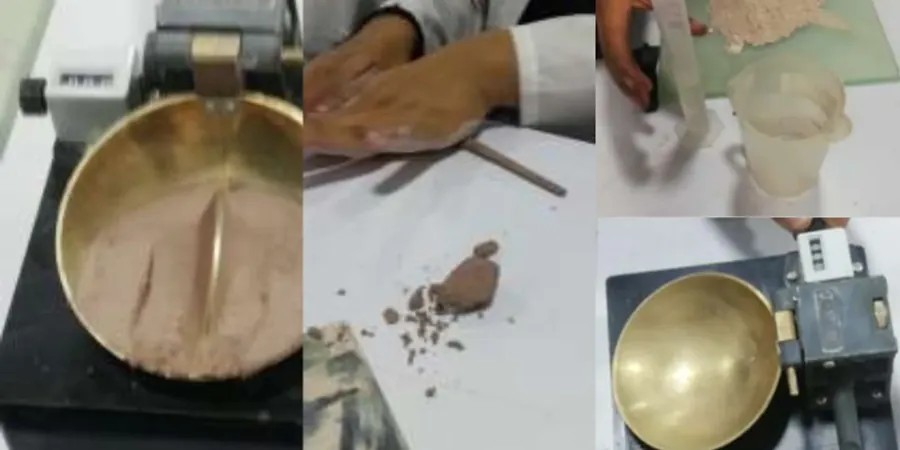
Pukekohe sits on a patchwork of weathered basalt and alluvial silts that shift dramatically with the seasons. A wet winter in Franklin District saturates the upper clay horizons, and by February the same ground can crack open in the summer dry. These moisture cycles are exactly what the Atterberg limits test was designed to quantify. When a new packhouse goes up near Valley Road or a subdivision breaks ground off Helvetia Road, knowing the plastic limit and liquid limit of the site clay tells us whether the soil will behave more like a brittle solid or a deformable paste. The grain-size distribution of the underlying tephra-derived silts often correlates directly with the plasticity index we measure in the lab, giving the structural engineer a clear picture of the volume change potential before a single foundation is poured.
In Pukekohe's volcanic ash soils, a plasticity index above 25% is a clear signal that footing depths must account for seasonal moisture cycling.
Local considerations
A contractor northeast of Pukekohe East Road once placed a well-compacted clay fill at 2% above the plastic limit during an unusually damp September. By January, desiccation cracks opened across the building pad and extended deep enough to compromise the bearing stratum, requiring costly undercutting and recompaction under geotechnical observation. This is the practical cost of not knowing your Atterberg limits. When the plastic limit is misidentified by even a few percentage points, the compaction window narrows to the point where standard site moisture conditioning cannot keep up. On high-plasticity CH clays common around the Pukekohe Hill slopes, the risk shifts from compaction failure to long-term swelling pressure against shallow footings, a problem that shows up months after handover. The Atterberg suite gives us the numbers to set defensible moisture specifications before earthworks begin.
Frequently asked questions
Why do Pukekohe clays need Atterberg testing before a standard house build?
The weathered basalt clays across Pukekohe often contain halloysite, which produces plasticity index values above 25%. NZS 3604 requires a site-specific ground investigation when expansive soils are suspected, and the Atterberg limits are the direct method to confirm or rule out a high-shrink-swell classification that would demand deeper footings or a stiffened raft slab.
What is the typical cost for Atterberg limits testing on a residential section?
For a single disturbed sample processed through the full liquid limit, plastic limit, and linear shrinkage determination, the fee ranges from NZ$90 to NZ$170 depending on the number of specimens and whether the sample requires pre-treatment to remove organic matter or iron oxides common in Pukekohe soils.
How long does it take to get Atterberg results from your Pukekohe facility?
Standard turnaround is three to five working days from sample receipt. We can expedite to 48 hours for urgent earthworks decisions, provided the samples arrive oven-dried and pre-sieved. Same-day expedite is available by prior arrangement during the summer construction peak.
Can Atterberg limits predict the shrink-swell behavior of the volcanic ash soils here?
Yes, the plasticity index and linear shrinkage together provide a reliable indirect measure of shrink-swell potential. In Pukekohe's volcanic ash-derived silts, a plasticity index above 25% combined with linear shrinkage exceeding 10% typically indicates a moderately to highly expansive soil that warrants specific foundation detailing per NZS 3604 Table 3.2.