← Home · Roadway

Flexible Pavement Design for Pukekohe Soils

Together, we solve the challenges of tomorrow.

LEARN MORE →

The volcanic ash-derived soils across Pukekohe create a specific set of conditions for flexible pavement design that we deal with every day in the lab. Much of the area sits on weathered Hamilton Ash formations, which can present low CBR values when saturated, and the water table across the Franklin district often sits within 1.5 to 3 metres of the surface during winter. Our team runs the full suite of soaked CBR-road testing alongside modified Proctor compaction to nail down the bearing capacity before any pavement structure is finalised. For projects near the Tūākau bridge approaches or along the industrial edges of Paerata, we frequently pair this with grain-size analysis to confirm the actual fines content in the subgrade, because what looks like a clean granular fill on site can sometimes carry 15 percent or more silt once it hits the sieve stack.

A pavement is only as good as the subgrade it sits on — and in Pukekohe, that means testing the soil at its wettest, not its driest.

Methodology and scope

A recent project we worked on involved upgrading a dairy shed access road out by Buckland where the formation had been cut into residual clay that softened badly after one heavy rain event. The contractor had already placed 150 mm of GAP 40, but the surface was pumping water through the wheel paths within a week. We took Shelby tube samples from the top 500 mm of subgrade and ran a series of consolidated-undrained triaxial tests to measure the effective friction angle, then cross-checked the results with a soaked CBR at the target density from our Proctor tests. The outcome was a revised pavement design that increased the basecourse thickness by 70 mm and introduced a geotextile separation layer — a solution tailored directly to the low-permeability Pukekohe clay. In our experience, the difference between a pavement that lasts ten years and one that fails in two seasons almost always comes down to how honestly the subgrade strength is characterised before the design charts are opened.
Flexible Pavement Design for Pukekohe Soils
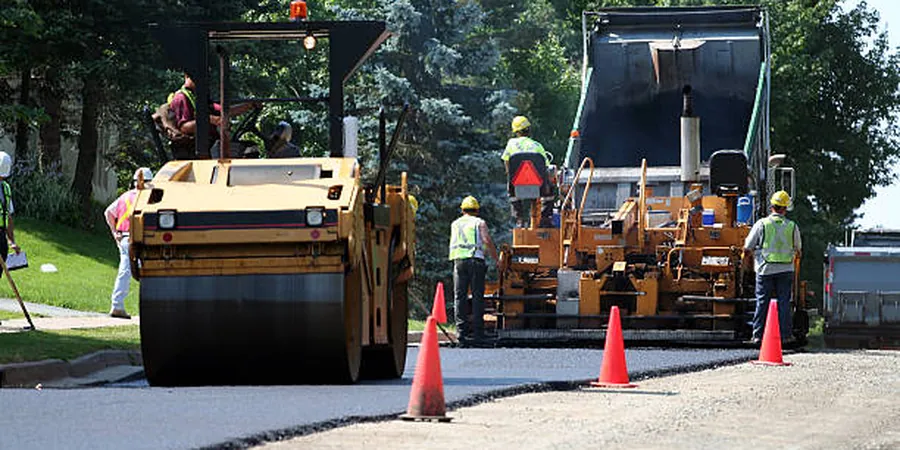
Technical reference image — Pukekohe

Local considerations

The most common failure mechanism we see in Pukekohe flexible pavements is subgrade saturation leading to loss of support under repeated wheel loads. When the volcanic ash subgrade takes on water and the CBR drops below 2 percent, the tensile strain at the bottom of the asphalt layer increases dramatically, and fatigue cracking appears within the first two years of service. Our lab runs repeated load triaxial testing on soaked specimens to quantify the resilient modulus under conditions that match what actually happens in a wet Franklin winter. Another risk we flag regularly is the use of low-quality granular fill that meets the grading envelope but carries too much plastic fines — something that a simple Atterberg limits check catches before the material goes into the pavement structure. Getting the drainage design right, particularly the depth and spacing of subsoil drains in the flat terrain around Pukekohe, makes the difference between a pavement that performs and one that needs reconstruction before its design life is half over.

Need a geotechnical assessment?

Reply within 24h.

Email: contact@geotechnical-engineering1.co

Technical parameters

ParameterTypical value
Design traffic loading (ESA)Up to 10⁷ equivalent standard axles (heavy industrial)
Subgrade CBR range (Pukekohe volcanic ash)3% to 7% (soaked, typical for Hamilton Ash)
Basecourse material (TNZ M/4)Scalped or premium AP40; soaked CBR ≥ 80%
Subbase material (TNZ M/3)AP65 or modified M/3; soaked CBR ≥ 30%
Compaction standard (modified Proctor)NZS 4402 Test 4.1.3; ≥ 98% MDD for basecourse
Design period (rural roads)25 years (standard); 40 years for arterial routes
Surface course (asphaltic concrete)AC 10 or AC 14, typically 30–50 mm thickness
Drainage coefficient (AASHTO)0.8–1.0 depending on subdrain configuration

Associated technical services

01

Subgrade Characterisation

Soaked CBR testing, Atterberg limits, and particle size distribution on undisturbed Shelby tube samples taken from formation level across the site. We report the design CBR at the 90th percentile as per NZTA practice, not the average.

02

Pavement Structural Design

Layer thickness determination using the Austroads mechanistic-empirical method adapted for New Zealand traffic spectra. We model the tensile strain at the base of the asphalt and the compressive strain on top of the subgrade, then verify against the NZTA supplement criteria for fatigue and rutting.

03

Construction QA/QC Testing

Field density by nuclear gauge or sand cone, basecourse plate load testing, and laboratory confirmation of aggregate properties during construction. We provide the lot-by-lot compliance documentation that council engineers in Auckland and Waikato expect.

Applicable standards

NZS 3404:1997 (Steel structures — for pavement dowel and reinforcement detailing), NZS 4402 Test 4.1.3:1986 (New Zealand compaction test — modified Proctor), TNZ M/4 Specification (Basecourse aggregate), TNZ M/3 Specification (Subbase aggregate), AASHTO Guide for Design of Pavement Structures (1993/2020 supplement)

Frequently asked questions

How much does flexible pavement design cost for a typical Pukekohe project?

For a standard flexible pavement design package covering subgrade investigation, laboratory CBR and Proctor testing, and the pavement structural design report, the cost typically ranges from NZ$2,400 to NZ$7,960 depending on the number of test pits, the linear metres of road, and the traffic loading complexity. Rural driveway designs sit at the lower end; industrial pavements with heavy ESA loadings and multiple material sources fall at the upper end.

What makes Pukekohe soils different for pavement design?

The weathered Hamilton Ash formations that dominate Pukekohe are silty clays with moderate plasticity and a tendency to lose significant strength when saturated. Their soaked CBR can drop to 3 percent or lower, which means the pavement structure has to be thicker or the subgrade needs lime modification to reach a workable bearing capacity. The flat topography also means drainage is slower, so the subgrade stays wetter longer than in hillier parts of the North Island.

Do you handle the field investigation as well as the lab testing?

Yes, we coordinate the full site investigation — test pit excavation, Shelby tube sampling, and dynamic cone penetrometer profiling — before the samples ever reach our laboratory. Having the same technical team involved from the field through to the final design report means we understand exactly how each sample was taken and what the ground conditions looked like, which avoids the disconnects that happen when field and lab work are split between different contractors.
Location and service area

We serve projects across Pukekohe and its metropolitan area.

View larger map