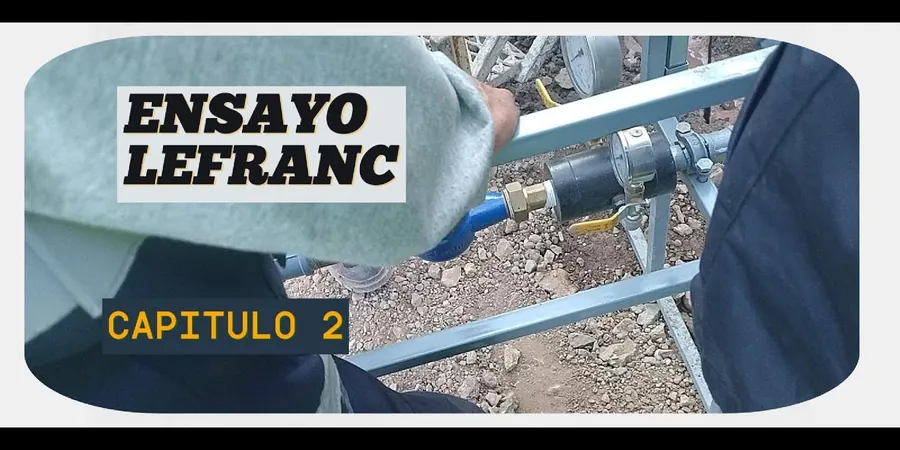
NZS 3404 and the NZGS soil and rock description guidelines require reliable hydraulic conductivity data when groundwater affects foundation bearing capacity, retaining wall drainage, or excavation stability. In Pukekohe, this matters more than many engineers first assume. The town sits at roughly 60 metres above sea level on a landscape shaped by ancient volcanic ash deposits, weathered basalt, and alluvial silts from the Waikato River tributaries. These formations create layered aquifers and perched water tables that are hard to predict from bore logs alone. A field permeability test – Lefranc in soil, Lugeon in rock – gives us direct in-situ values, not lab-derived estimates that miss fractures, macropores, and true anisotropy. Our team runs these tests with automatic data loggers and NZGS-compliant reporting, so the design team gets defensible k-values for dewatering design, seepage analysis, or cutoff wall specification. When we encounter weathered Puketoka Formation silts at depth, the difference between a remoulded lab sample and the real in-situ mass can be an order of magnitude, and that gap has caused more than one tender-stage surprise on local subdivision projects.
A Lefranc test in fissured Pukekohe ash can yield a permeability forty times higher than the lab value – the difference between a dry excavation and a flooded one.
Local considerations
Pukekohe's expansion from a small rural service town into a major growth node shifted the geotechnical risk profile considerably. What were once market gardens and horse paddocks are now high-density residential subdivisions with deep stormwater infrastructure. The town's volcanic substrate – Hamilton Ash beds overlying Waitemata Group rock – weathers into silty clays that can hold water in lenses, creating localised hydrostatic pressure behind retaining walls. One site near the old Pukekohe East quarry had a measured Lugeon value of 18 in the upper 3 metres of highly fractured basalt, dropping to 2 Lugeon in the massive rock below – a variation you'd never capture with a single falling-head test in a borehole. Ignoring this heterogeneity leads to retaining walls without adequate weepholes, failed trench stability, and long-term softening of the subgrade. A well-executed field permeability test programme, designed with stage-testing and proper packer isolation, removes that guesswork and gives the earthworks contractor a realistic picture of inflow rates before they mobilise pumps. For projects near the Pukekohe Hill escarpment, where the geology transitions rapidly from clay to fractured greywacke, we often combine the Lugeon test with an in-situ permeability correlation to calibrate the soil-rock interface.
Frequently asked questions
What is the typical cost range for a Lefranc or Lugeon test in Pukekohe?
For a standard Lefranc variable-head test in a shallow auger hole, costs typically range from NZ$1,200 to NZ$1,800 per test point, including setup, data logging, and NZGS-compliant reporting. Lugeon tests in rotary-drilled coreholes run between NZ$1,500 and NZ$2,000 per borehole for a full five-stage test, depending on access and depth. These figures cover the field permeability test itself; mobilisation, traffic management, and any prior drilling are quoted separately after a site visit.
When should I specify a Lugeon test instead of a Lefranc test?
Lugeon tests are designed for fractured rock masses where packer isolation is needed to test discrete intervals. In Pukekohe, we switch to Lugeon once auger refusal is reached in basalt or greywacke, typically below 8-12 metres. The five-stage pressure cycle reveals whether fractures dilate, wash out, or exhibit turbulent flow – information a single-stage Lefranc test cannot provide. For soil profiles (silts, clays, sands) above rockhead, Lefranc remains the appropriate method.
How many field permeability tests do I need for a typical Pukekohe subdivision?
NZGS guidelines recommend a minimum of one test per distinct hydrogeological unit encountered across the site. For a medium-sized subdivision in Pukekohe (2-5 hectares), we typically design a programme of 4 to 6 Lefranc tests at varying depths to capture the shallow ash layers, the transition silts, and any sand lenses. If the stormwater management plan includes deep soakage trenches or detention tanks founded in rock, we add 2-3 Lugeon tests to characterise the fracture network. The exact number depends on site variability, which we assess during the initial desk study and walkover.